
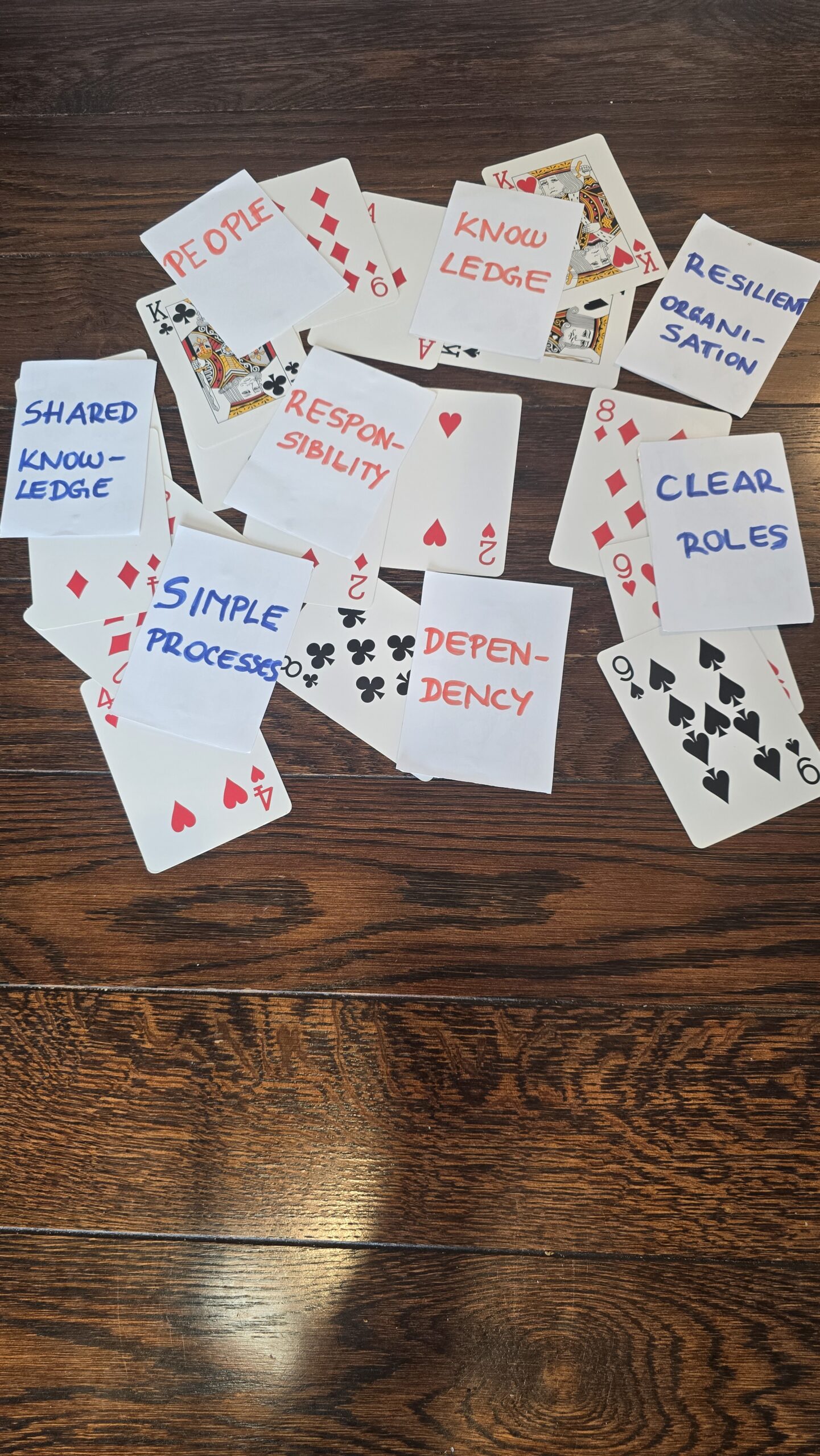
Why the most loyal, well-run small businesses are often one holiday away from chaos, and the fix that takes a shared page, not a restructure.
Want to know whether you own a business or a job? Try taking a proper week off.
The week off that didn’t last three days
Picture a small trades business. Six or so staff. Loyal customers, a good name around town, an owner who built the whole thing from nothing. Ask him how it runs and he’ll tell you it’s “pretty dialed in.”
Then he takes his first real week off in two years.
He doesn’t make it to Wednesday.
On Monday, a customer changes a job mid-run, and no one on site knows how to reprice it.
On Tuesday, a supplier invoice doesn’t match the order, and no one can say who approved the original… because he did, out loud, on a job site, and never wrote it down.
By Wednesday he’s back with his phone in hand, quietly upset about it, not at his crew, but at himself.
Because here’s what the week off exposed: he wasn’t running the business. He’d quietly become the business. Roughly half of what happened each day lived in one place, his head, and nowhere else.
It’s a systems problem (lack of).
This is the part owners tend to get wrong. When the wheels come off during a break, the instinct is to blame the team, “they can’t cope without me.” Usually that’s not it. The crew is good. They simply didn’t have the information, because it had never been taken out of one person’s head and written down.
That’s actually the good news. A people problem is slow and painful to fix. A systems problem you can start fixing in an afternoon.
What changed
Nothing dramatic. We took the three things that had blown up the week, the pricing rules, the approvals, and the core job process, and moved them out of his head onto one shared page:
- Who reprices a changed job, and exactly how.
- Who can approve what, and at what dollar figure.
- The steps a job runs through from quote to invoice, including the “I just know to…” bits that had never been said out loud.
The next holiday, the phone stayed quiet.
Why this happens to good businesses
74% of New Zealand businesses have no employees at all. They’re owner-run by default. And even the ones with staff usually run on one or two people’s knowledge. (Stats NZ, Business Demography, at February 2025.)
So if this sounds familiar, you’re not disorganised and you’re certainly not alone. It’s simply what happens when a business grows out of one capable person’s habits. Those habits work, right up until that person isn’t there.
If half your day-to-day lives in your head, you don’t own a business yet. You own a job that can’t run without you. And the fix isn’t hiring harder or working longer, it’s getting one process at a time onto a shared page.
Start with one page
You don’t need a manual for everything. You need the single process that would cause the most chaos if you vanished for a week, mapped, once, somewhere your team can actually find it.
No responses yet